

1. Basic Stitch Introduction
In leather goods, luggage and apparel manufacturing, stitch selection directly affects seam  durability, production cost and finished‑product performance. Factory technicians and buyers frequently ask: What are the key differences between saddle stitch and lockstitch?
Saddle stitch is a classic hand‑sewing craft mainly applied to high‑end leather products. It adopts one single thread with two needles passing through the same hole from opposite directions, each stitch works independently. Even if one stitch snaps, the whole seam will not unravel. Lockstitch is the mainstream machine‑sewing solution for mass production. It interlocks upper thread and bobbin thread inside fabric layers, delivering neat and consistent seams at high speed. The intelligent feeding computerized lockstitch sewing machine is typical industrial equipment built for stable lockstitch output, widely used in garment, outerwear and home‑textile mass workshops.
2. Stitch Difference Comparison
|
Comparison Item |
Saddle Stitch |
Lockstitch (Machine‑made) |
|
Working Principle |
Hand‑operated; one thread with two needles, independent locking for every stitch. |
Machine‑driven; upper thread interlocks with bobbin thread inside material. |
|
Anti‑unravel Performance |
Excellent. Broken single stitch does not spread damage along the seam. |
General. Thread breakage may cause continuous unraveling along the seam. |
|
Production Efficiency |
Slow, heavy manual labor, not fit for large‑batch orders. |
High‑speed automatic sewing, perfect for mass‑volume production. |
|
Typical Application |
Luxury leather goods, wallets, high‑stress leather straps. |
Garments, down coats, home textiles, general‑purpose luggage, processed by intelligent feeding computerized lockstitch sewing machine. |
|
Cost Level |
High labor cost, limited output. |
Low unit cost, stable mass‑production capacity. |
3. Machine Core Advantages
Although hand‑made saddle stitch gains superior anti‑unravel strength for premium leather crafts, mo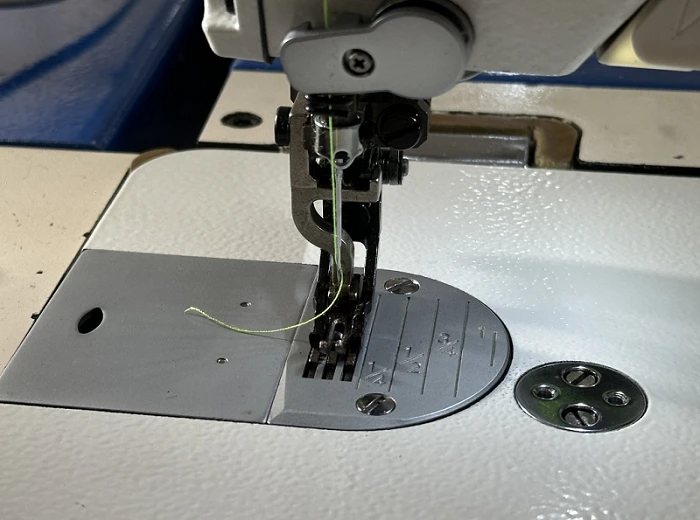 st apparel and textile factories rely on lockstitch for daily bulk manufacturing. The intelligent feeding computerized lockstitch sewing machine upgrades traditional lockstitch performance with intelligent differential feeding system.
It realizes independent adjustment for upper and lower feed rates, effectively solving common problems such as fabric shifting, wrinkling and layer misalignment when sewing multi‑layer mixed‑thickness materials. It works well for thin mesh fabric as well as thick down‑jacket shells. Its CNC programmable function supports segmented pleating and folding, combining pre‑pleating, positioning and stitching into one workflow, lifting production efficiency by more than 30% compared with conventional lockstitch machines and lowering rework rates significantly. Equipped with visual control panel, it reduces skill requirements for operators, making it a practical lockstitch production solution for medium‑and‑large‑scale workshops.
4. Industrial Selection Guide
Manufacturers should choose stitching method according to product positioning. For high‑end small‑batch leather goods with strict durability requirements, saddle stitch remains the preferred option. For mass‑produced garments, home textiles and general‑purpose luggage, lockstitch finished by the intelligent feeding computerized lockstitch sewing machine balances sewing quality, consistency and production cost, which is the most cost‑effective industrial solution for modern sewing workshops.